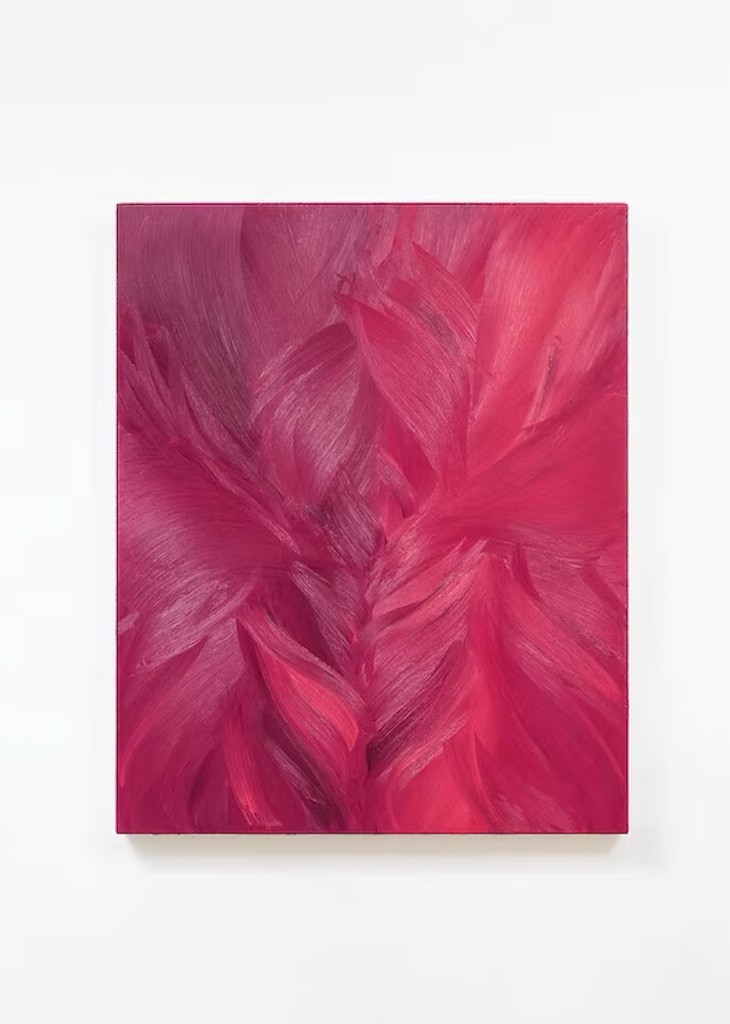
Jason Martin, Tantra, 2025, oil on aluminium, cm 160×130×10. Vertex, apex, summit: these are all words that could be used to describe the exhibition's title, and it is an ambition that is fully realised. The show brings together eight striking pieces created using intense chromatic patterns and three main materials: aluminium, light, and oil paint. Together, these materials create surfaces that appear almost sonorous and tactile, encouraging viewers to appreciate and absorb them visually. The artist’s distinctive style is recognisable and consistent yet refreshed. By contrast, the forms are indecipherable — or rather, they resist any single interpretation, inviting the viewer to interpret them freely. Consider that Jason Martin (Jersey, UK, 1970) attended Goldsmiths in London while still in his twenties and became associated with the YBAs — two experiences that helped shape his aesthetic sensibility, commitment to research and passion for experimentation. Each piece is an ever -changing, vibrant material presence that compels us to keep looking. “In my work, colour is essentially structure rather than decoration; the material becomes visceral, erotic and experimental,” Martin explains. These are works in which thickness challenges restraint and the surface becomes performative.
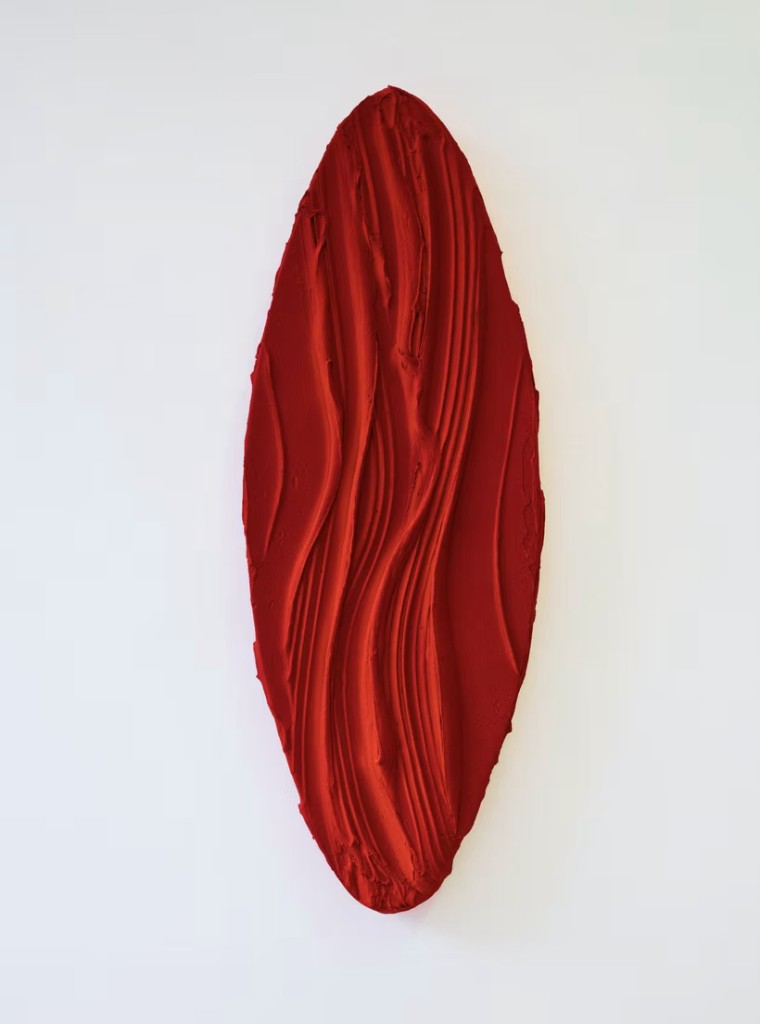
One example is Tantra, which evokes a spiritual imperative: to challenge perception by testing it and opening the mind to boundless, infinite knowledge, thereby breaking free from the constraints of conventional understanding. We can immerse ourselves in these nuances, swim through them and even be overwhelmed by them, only to resurface transformed — changed and disconnected from established protocols, yet reconnected with what is essential. This is precisely where the exhibition’s strength lies: in transforming painting into a physical experience before it becomes a visual one. Jason Martin's surfaces do not merely reflect light; they seem to capture and release it in continuous vibrations, as though colour itself were breathing. As we move through Galleria Christian Stein, our eyes are compelled to shift the distance, angle, and rhythm at which we observe. Every step alters our perception of the work, opening up new possibilities for interpretation.
Jason Martin, Charlemagne, 2022, Mixed media on aluminium, cm 140×50×10.
The title Vertex thus becomes more than just a metaphor. It signifies the intersection of the gallery's sixty years of activity and the artistic practice of an individual who has long pushed the boundaries of painting. Painting is no longer a flat surface; it becomes a body, a relief, almost a landscape. Aluminium amplifies the light, while oil paint shapes ridges and chromatic flows. The material itself emerges as a force of nature.
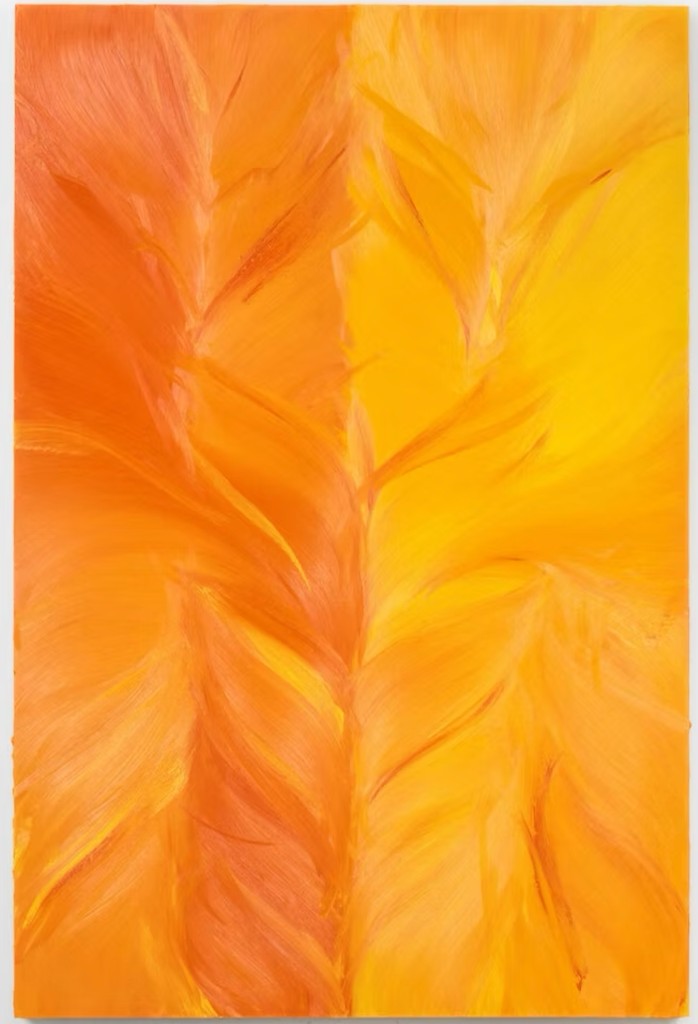
In this dialogue between control and surrender, gesture and structure, the works are not there to be deciphered, but to be experienced from within. There is no recognisable image, only an energy field to inhabit. Perhaps this is precisely the summit that the exhibition leads us towards: a moment when painting ceases to represent something and simply becomes an experience.
Jason Martin, Virgo, 2025, Oil on aluminium, cm 285×190×10. Virgo is no less striking, with its visual field remaining open to multiple interpretations. Once again, Jason Martin invites viewers to question and reflect. In this piece, textured streaks of paint change appearance depending on the light and the viewer’s position. They capture reflections from the underlying metal, creating an almost dynamic effect as though the surface were in constant motion. This lends the work a tactile quality, as though it had been sculpted in relief, and makes it immersive: the eye glides through the folds of a colour that remains coherent in its instability and is free from any reference to a clearly defined image. Another interesting aspect is the artist’s ongoing relationship with nature, nurtured by his time spent in the Alentejo region, an area rich in biodiversity. “Until my adolescence, I had never seen a horizon other than where the sky met the sea. I was exposed to the drama of an environment forever shaped by the elements,” Martin recalls. Portugal, with its Atlantic coastline and ever-changing ocean light, is an inexhaustible source of visual and sensory inspiration for Martin. Here, Martin continues to develop a deeply physical painting practice in which gesture and material engage in dialogue with memories of the marine horizons that shaped his childhood. In this sense, nature is not merely a subject or an iconographic reference, but a constant presence that guides the creative process: a silent force which, from the cliffs of his childhood to the present day, directs the artist’s gaze and practice. The painting thus becomes an almost sculptural object, engaging the viewer’s space, mind, and body and allowing them to experience what it means to reach the vertex at last.