
When the body, with its capacity to subvert norms and generate pleasure, becomes a commodity, a crucial question arises: can this be considered an act of political rebellion, or is it merely another form of submission to the market? The body — a crossroads of power, identity and desire — sits at the centre of a complex debate. In feminism and queer thought, it takes on a double role: a symbol of resistance and a site of exploitation.
The commodification of the body — sexual or labour-related — challenges fundamental dichotomies such as freedom and oppression, choice and constraint. In a capitalist system that turns everything into commodities, the body becomes the terrain of a paradox: while self-determination is claimed, the market reclaims it as its own. Where does individual control end and exploitation begin?
The relationship between feminism and the sale of the body includes issues such as sex work, surrogacy and the commodification of the image. Some feminist currents claim these practices as personal expression and a source of economic livelihood. Others highlight the risks of objectification and the perpetuation of patriarchal dynamics in a capitalist context.
For example, Marina Abramović, in the performance Role Exchange (1975), challenges social conventions and questions the boundaries between social and professional identity. The audience plays a crucial role in the work, which destabilises and provokes. «What happened? Art happened»2, the artist says, underlining how this work is not limited to a narrow context but involves each of us, intertwining with the dynamics of everyday life.
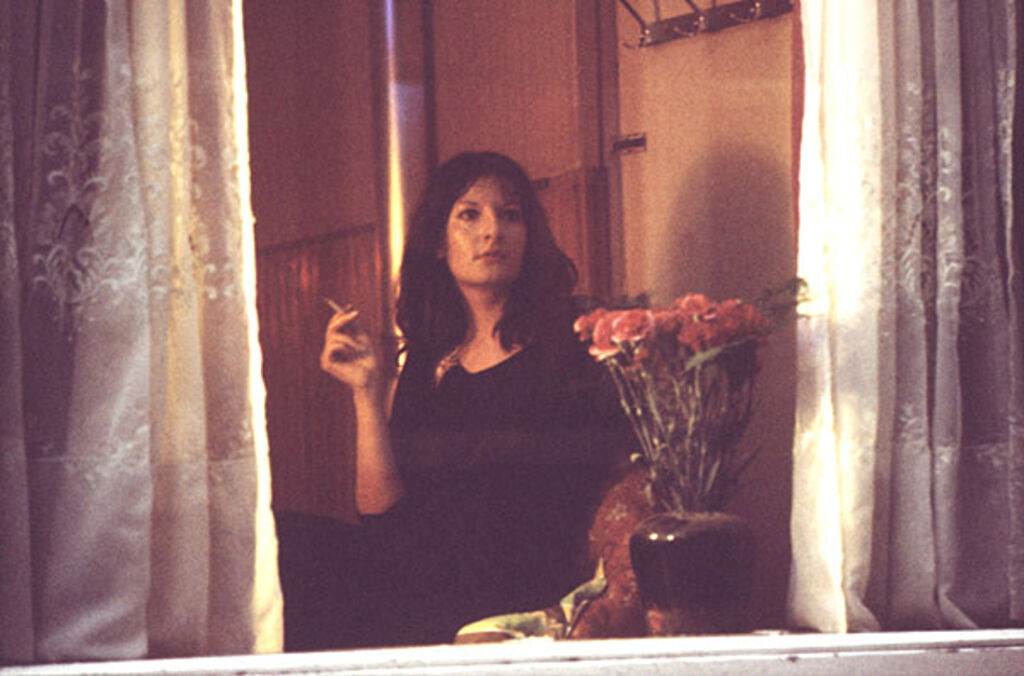
Feminist artistic practices are fundamental to the struggle for gender equality, using art to resist, critique and transform culture. Over time they have evolved: artists such as Martha Rosler ask essential questions: «Take the Money and Run? Can Political and Socio-Critical Art 'Survive'?»3. In an age when capitalism dominates — and at the same time shows signs of crisis — it becomes essential to reflect on the role and function of art in this scenario.
The worker’s body, the other commodity
In parallel, the worker’s body offers another critical lens. Alienating labour turns the body into a mere instrument for generating profit, recalling prostitution: during working hours, the worker’s body becomes the property of the employer, reduced to dehumanised labour power. The worker, like the sex worker, sacrifices identity and dignity. Yet waged labour is socially accepted, while prostitution is stigmatised. Both, however, reveal a system that reduces people to resources, ignoring their human essence.
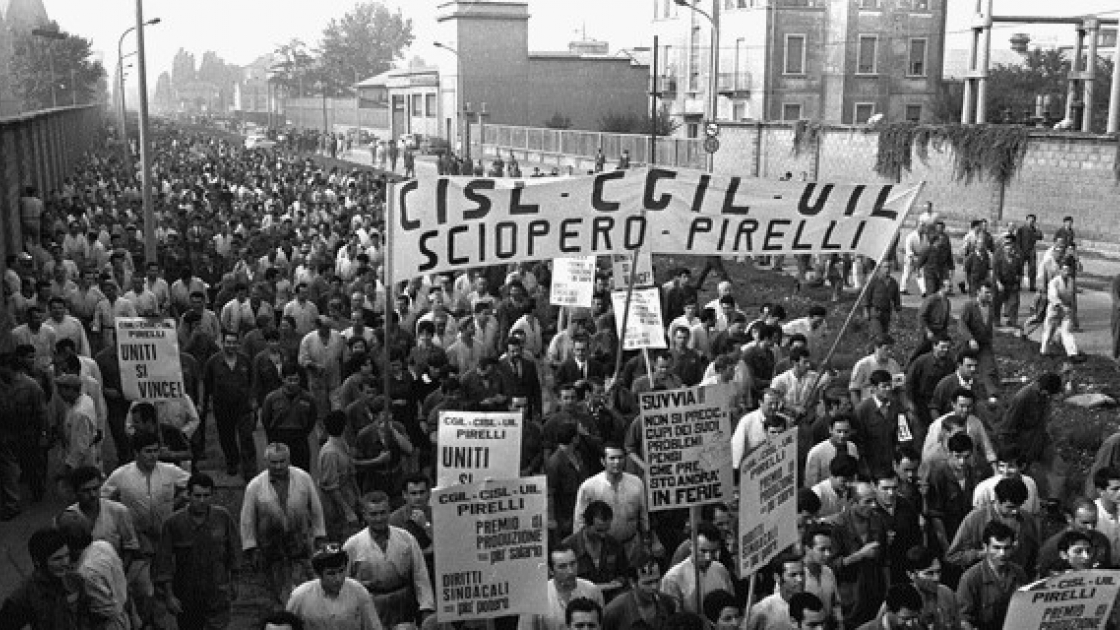
In the contemporary world, the most demanded form of labour is intellectual prostitution: a concept used to describe a situation in which one’s intellectual, creative and/or professional capacities are made available in exchange for economic advantage, power or visibility, sacrificing personal values, ethics or authenticity. Here the term does not refer to physical activity, but to conforming to the demands of a system often associated with fields such as journalism, art, academic research and marketing, where workers may find themselves forced to produce content or results that serve only external — often questionable — interests.
The concept is closely tied to the debate on intellectual freedom and personal integrity in an increasingly competitive and often depersonalising market. Intellectual prostitution, which has become an ever more fitting metaphor for today’s labour landscape, is both a cause and a consequence of the progressive — unstoppable and relentless — replacement of workers by machines. It is the preface to a world in which automation and digital labour assert themselves as dominant sectors.
This transition is not free of compromise: intellectual work is often sold off to the highest bidder, sacrificing creativity, ethics and autonomy on the altar of productivity and profit. Society seems to reward the capacity to adapt to market demands more than authenticity and the intrinsic value of human skills. «One must actively prepare to wait for the unexpected. And this depends on the capacity of precarious and intermittent labour to assert itself ruthlessly»4 — philosopher Paolo Virno says in an interview, comparing the movements of ’77 with our present situation.
From the 1970s to today: a new manifesto
In the 1970s, feminism and workers’ struggles were intertwined. In Milan, the heart of radical feminism, and in Rome, home to collectives such as Rivolta Femminile, battles against oppression and inequality took shape. Themes such as abortion, gender violence and domestic labour became central. Rivolta Femminile, co-founded by Carla Lonzi and Carla Accardi, produced a manifesto that rejected every patriarchal definition of women.
Their manifesto is a foundational document of Italian feminism, affirming that woman is not a “minority” to be emancipated, but an autonomous subject who refuses male domination. Rivolta Femminile had a lasting impact in redefining cultural debate in Italy. Today feminism is more diverse and intersectional, but the struggle continues.
As in the 1970s, we need a new manifesto that affirms: we are neither commodities nor territories to be conquered, but free people who refuse every invisible and unrecognised form of exploitation. Only by uniting feminism, queer struggle and collective movements can we challenge the system that reduces the body to a utilitarian function, reclaim spaces of authentic freedom and affirm “we are here”.
The urgency of intervention is confirmed by the already alarming number of femicides recorded in Italy in 2025. The new year opened with the murder of Eliza Stefania Feru and with a ruling of the Criminal Court of Modena. The need to confront gender violence with determination suggests the necessity of a renewed manifesto through the following ten fundamental principles:
«The real lesson we have learned from the “post-political” era is the existence of a minimum of deliberation on collective ends that cannot be kept out of the public sphere forever. Without the re-emergence of mass organisation, however, this can only happen at a discursive level, mediated by the media: every major event is analysed for its ideological character, producing controversies that take shape between increasingly clearly defined camps on social platforms, and that are then amplified by each side’s preferred media»5.