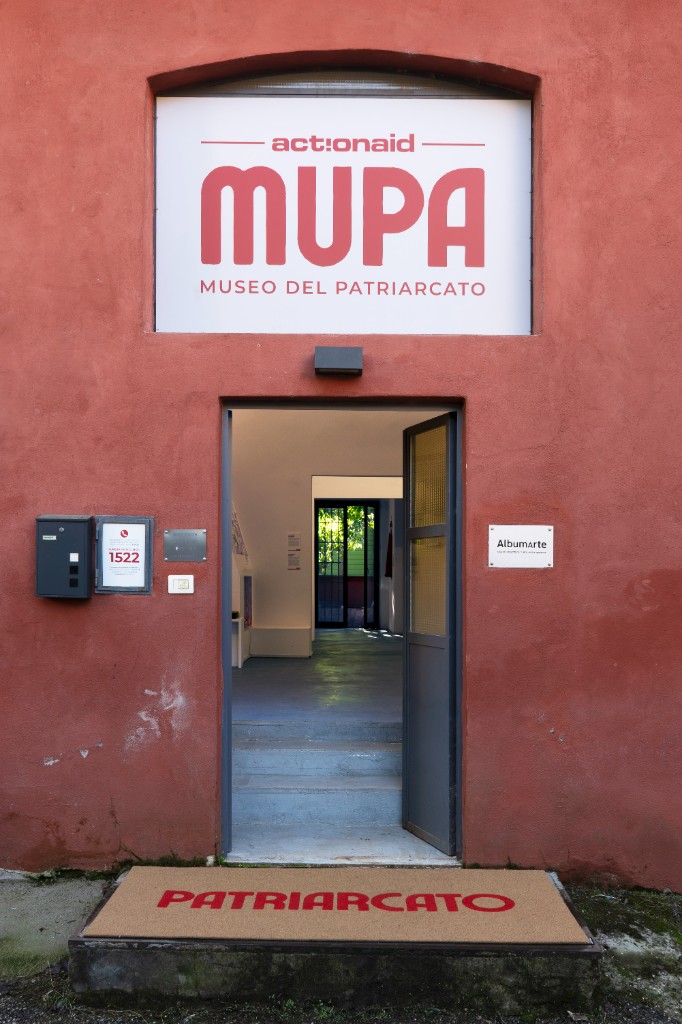
MUPA – Museo del Patriarcato, ActionAid.
Trampling: The gender gap. Femicide. These are concepts that weigh heavily. Words that cut across bodies, communities, and the public sphere. With the MUPA – Museum of Patriarchy exhibition at the Cisterns in Milan's Fabbrica del Vapore, ActionAid brings these concepts into the exhibition space, transforming them into material for display. Open to visitors until 21 March and accompanied by a series of free initiatives, the project emerges as an uncontrollable form of resistance. Entering the Cisterns at Fabbrica del Vapore involves moving through a space designed not for display, but for containment, support and preservation. In MUPA, promoted by ActionAid, this original function is overturned: the functional infrastructure becomes a framework for interpretation and the focus is not on a collection of objects, but on an entire system. Here, patriarchy does not appear as one theme among many, but as a pervasive, almost atmospheric presence. It cannot be confined to a single form, but instead emerges through the friction between words and bodies, norms and behaviours, and the explicit and implicit.
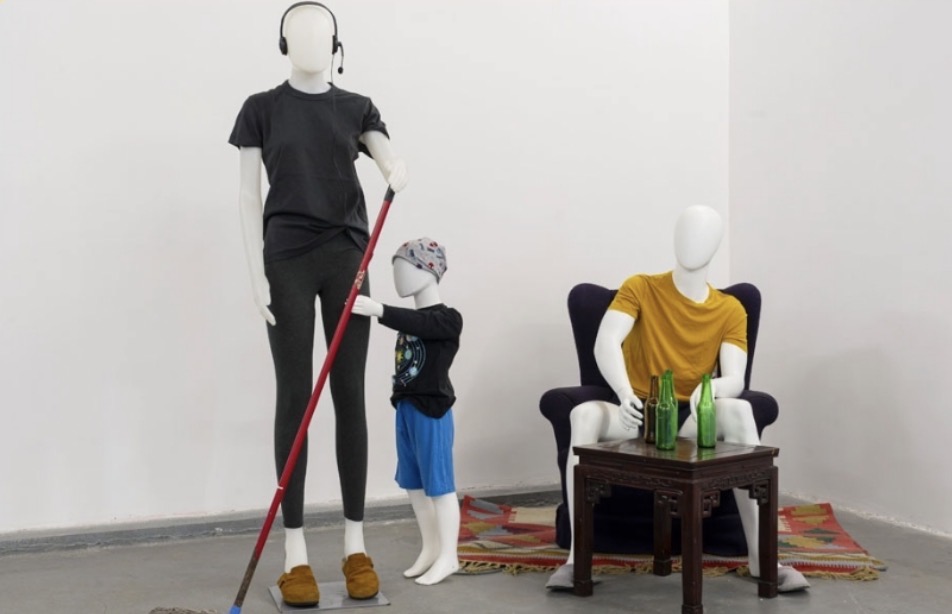
MUPA exhibition installation, Cisterns of Fabbrica del Vapore, Milan.
The exhibition design and activities developed as part of the project help to create a porous, accessible space in which the exhibition itself becomes part of the visitor experience. The architectural structure of the Cisterns at Fabbrica del Vapore accentuates the tension between container and content, and between industrial heritage and new forms of cultural production. In doing so, it becomes an integral part of the discourse.
'Trampling', 'gender gap', 'femicide': when brought together, these terms do not form a definition, but rather a constellation of urgent concerns. MUPA treats these terms as clues rather than categories, as points of entry into a complex system that continues to produce tangible effects in the present day. Here, patriarchy is approached as an artefact to be observed, questioned and dismantled. It is a cultural mechanism that has produced narratives, languages and forms of violence that continue to affect queer people today. Exhibiting it makes it visible, open to analysis and capable of being dismantled. This involves stripping it of its apparent naturalness and restoring it to its constructed — and therefore changeable — nature. The MUPA (Museum of Patriarchy) is part of a broader reflection on the role of cultural institutions in the contemporary world. While museums traditionally organise the past, here the process is reversed: the present is called into question through an interwoven narrative of artistic practices, activism, and educational tools. Alongside its exhibition element, the project operates as an environment in which knowledge is constructed within a specific context. Talks, workshops and public events are not ancillary activities, but extensions of the museum itself. Within these practices, language is not just an object of analysis; it is also a tool for action. Naming becomes an act that shapes reality, alters perception, and opens up possibilities for connection. The public programme provides opportunities for dialogue between professionals, activists, scholars and the general public, establishing the museum as a venue for collective learning. From this perspective, visitors are active participants in a process aimed at fostering critical awareness and equipping them with the tools to interpret the present, rather than passive recipients.
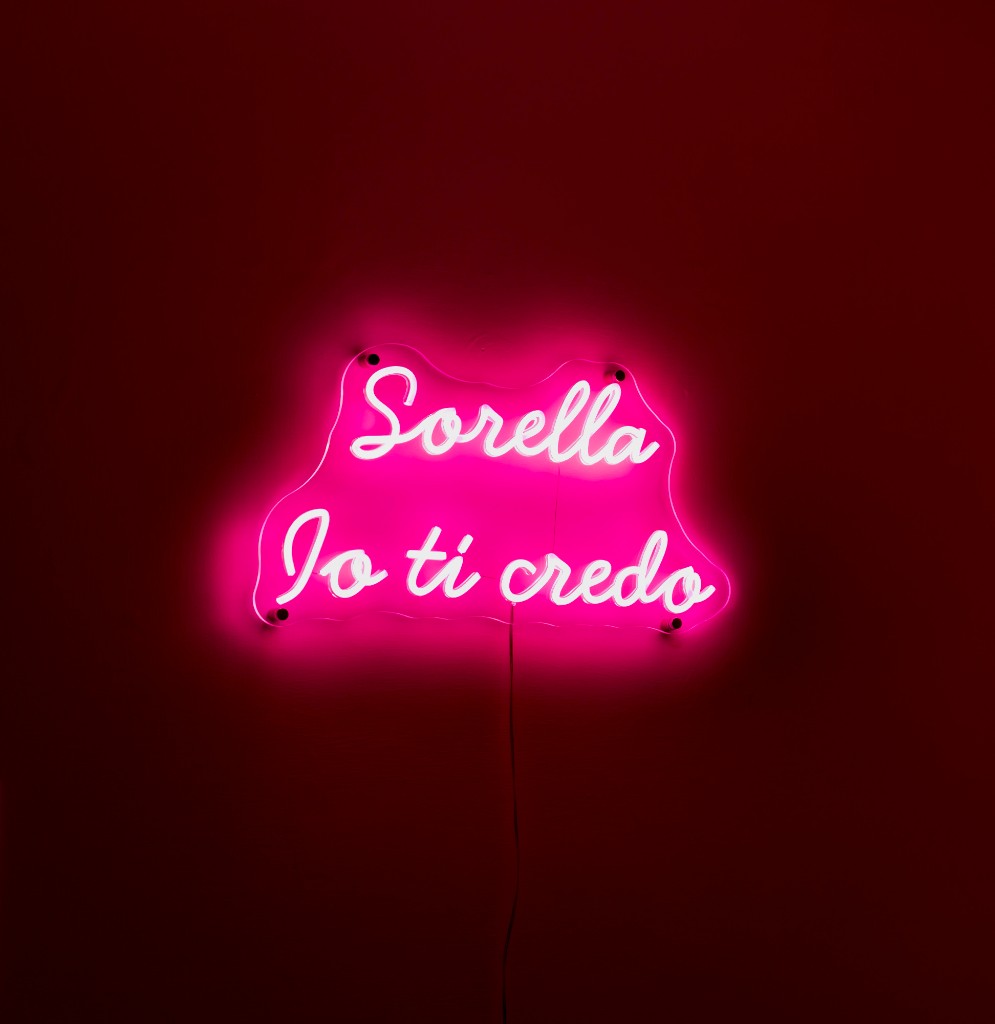
MUPA, Museo del Patriarcato. «Sorella Io ti credo».
The underlying idea is that of a museum of the future which not only preserves, but also critically archives the structures that shape our society today. From this perspective,
rather than merely being represented, patriarchy is deconstructed; its material and symbolic implications are analysed, and it is examined in relation to contemporary forms of inequality and violence, including those that affect queer people and marginalised identities systematically. MUPA therefore emerges not merely as an exhibition, but as a collective critical exercise — an attempt to envisage a society that can recognise, name and overcome its own oppressive structures. In this sense, the museum is a transitional space that opens up possible futures, rather than a destination. MUPA envisages a museum of the future as a place where the structures that shape today's society can finally be archived as the legacy of a system to be overcome. MUPA does not merely represent a subject; it creates an experience that challenges its implications. The museum operates as a threshold: on one side, it documents the past; on the other, it points towards the future. Rather than translating into an abstract utopian vision, the idea of a museum of the future is a concrete gesture: treating the present as something that can be archived, not to consign it to the past, but to acknowledge it and ultimately move beyond it.